
Adhesive Solutions for Stepper Motors
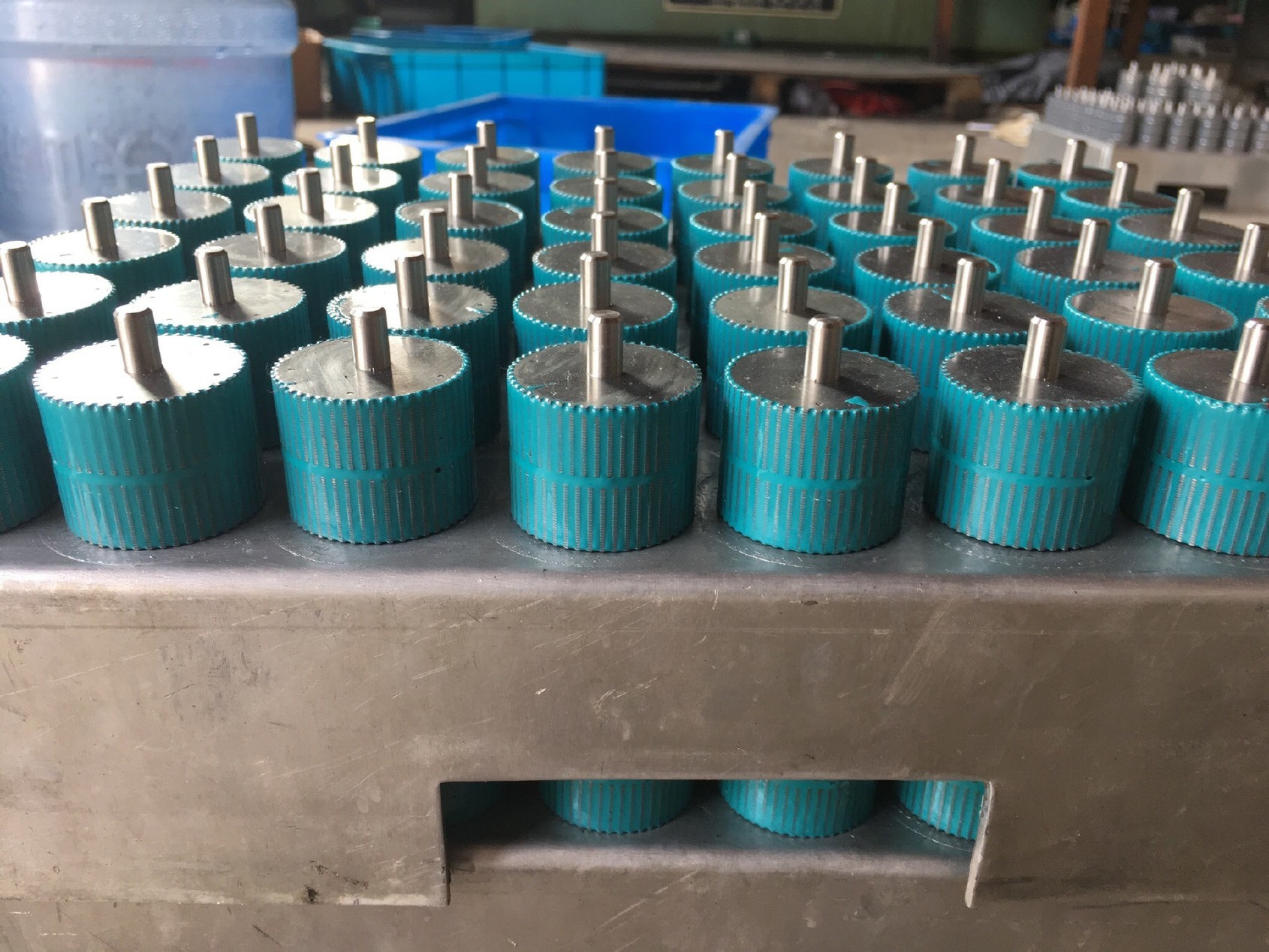
1. Development of the Stepper Motor Industry and Solutions for Rotor Coating with Epoxy Adhesive:
With the advancement of industrial automation, intelligent manufacturing, and robotics, the stepper motor industry has entered a phase of expanded application potential. From traditional office equipment and textile machinery to cutting-edge aerospace and military systems, stepper motors play an indispensable role.
High precision, miniaturization, and high efficiency have become the primary trends in the development of stepper motors. This, in turn, places increasingly stringent demands on rotor machining accuracy in motor manufacturing; particularly during rotor grinding, any burrs or contaminants that arise can impede the interaction between the rotor and stator, preventing the motor from operating properly.
To this end, Shanghai Hinnel New Materials has developed a rotor coating epoxy adhesive solution. By applying a layer of epoxy resin adhesive to the outer circumference of the motor rotor and then performing grinding after curing, it ensures both the machining accuracy of the rotor and the overall performance of the motor. Precision coating technology is becoming a critical step in enhancing the performance and reliability of stepper motors.
As an open-loop control element that converts electrical pulse signals into precise angular or linear displacements, the stepper motor plays a crucial role in modern digital programmable control systems. Its speed and stopping position depend solely on the frequency and number of pulses, and its insensitivity to load variations makes it widely used in automation, precision manufacturing, and other fields.
With advances in technology, the demands for stepper motor precision and reliability continue to rise, making rotor epoxy coating one of the key processes for enhancing motor performance.
2. The Importance of Coating the Rotor with Epoxy Adhesive
The epoxy coating applied to the stepper motor rotor serves multiple critical functions: the epoxy resin layer forms a robust protective barrier, enhancing insulation performance, providing moisture and dust resistance, and offering vibration‑and‑shock resistance, thereby reducing vibration and noise. This ensures reliable operation of the motor in harsh environments and extends its overall service life.
Compared with conventional powder‑coating processes, epoxy adhesive coating offers dust‑free operation, strong adhesion, high‑temperature resistance without delamination, and reliable performance, and has now largely replaced the traditional powder‑coating method.


3. Shanghai Hinnel New Materials offers the following two epoxy adhesives for coating stepper motor rotors:
HN6020D Single-component epoxy adhesive: This is a solvent-free, single-component modified epoxy resin product that features a low coefficient of linear thermal expansion, excellent high-temperature resistance, superior impact and vibration resistance, and high toughness. At room temperature, it boasts an exceptionally long shelf life, eliminating the drawbacks of conventional single-component epoxies that require refrigerated storage and dry‑ice transport. It also cures rapidly upon heating. 150℃-30 minutes), with a temperature resistance of up to 260℃ This adhesive boasts easy application, no dripping or sagging, minimal air bubbles, strong bonding, high-temperature resistance, and excellent sandability, and has been in long-term use within the industry.
HN6225R-26 Two-component epoxy adhesive: Solvent-free liquid epoxy adhesive, suitable for room-temperature or medium-temperature curing.
A/B It offers a long pot life after mixing, with a smooth, particle-free colloid; low viscosity yet exceptionally high thixotropy; and high bond strength upon curing. It can withstand temperatures up to… 180℃ 。
Table: Recommended Coatings for Stepper Motor Rotors
| Application scenarios | Adhesive Type | Key Features | Product model |
| Rotor coating | Single-component epoxy adhesive | Single-component, easy to apply, high-temperature curing. | HN6020D |
| Rotor coating | Two-component epoxy adhesive | Cures at room temperature or moderate temperature, with a long working time. | HN6225R-26 |
4. Video of epoxy coating applied to a stepper motor rotor:
5. Coating Processes and Technological Advances (Further Reading)
There are various methods for coating rotors with epoxy resin, and selecting the appropriate coating process based on specific production requirements and motor type is of paramount importance.
Dispensing is a precision coating technique that involves heating a highly penetrative, single-component epoxy adhesive to 70℃ , the rotor is preheated to 80-90℃ , then use a dispensing machine to apply the adhesive evenly and precisely onto the rotor commutator hooks, and finally in… 130℃ Cure the adhesive thoroughly in the oven.
This process can effectively extend the service life of products, serving as a replacement for conventional polyester encapsulating coatings.
Epoxy resin tape transfer technology is another innovative coating solution. This apparatus comprises a worktable, a feeding mechanism, and a coating mechanism; the coating mechanism includes a coating station, an unwinding unit, and a rewinding unit.
An epoxy resin tape is installed within the unwinding mechanism; the tape passes over the upper end of the worktable, adheres tightly to the surface of the coating table, and then connects to the rewinding mechanism.
The motor rotor to be coated is conveyed by the feeding mechanism across the upper surface of the coating station. At the left end of the station, an epoxy resin adhesive film is applied, and at the right end, the rotor is pressed firmly to transfer the adhesive film onto the rotor via a transfer tape.
This technology reduces adhesive waste, eliminates the need for repeated heating of the adhesive, and extends the service life of the finished motor rotor.
The dip-coating process uses low-viscosity epoxy adhesive, such as Shanghai Hinnel. HNEP 6225-5 Two-component epoxy wire impregnation resin, suitable for impregnating hollow motor windings and for drip‑impregnation reinforcement of micro‑motor windings.
This adhesive features low viscosity, a long working life, excellent flowability, and easy penetration into product gaps. Upon curing, it is free of bubbles, with a smooth, glossy surface and exceptionally high hardness.
6. Quality Control and Performance Evaluation
The quality of epoxy coating directly affects the performance and reliability of electric motors; therefore, it is essential to establish a rigorous quality control system and robust performance evaluation criteria.
Visual inspection is a fundamental quality-control method. The cured adhesive layer should have a smooth, glossy surface, free of bubbles and impurities. Its color is typically green or blue (customizable).
Physical property evaluation includes viscosity ( 25000-35000cps ), specific gravity ( 1.3 g/ml ), hardness ( Shore D 87 ), flexural strength ( 16.1 kg/mm² ) and tensile strength ( 220 KG/CM² ) and so on.
Electrical performance testing includes volume resistivity ( 4.7×10¹ ⁶ Omega -cm ), surface resistance ( 5.8×10¹ ⁶ Omega -cm ) and the dielectric breakdown voltage ( 20 kV/mm ) and other indicators.
Environmental reliability testing is a critical step in evaluating the performance of epoxy adhesives, including high-temperature resistance testing ( 200℃ ), moisture‑ and water‑resistance testing, solvent resistance testing, and so on. The coefficient of thermal expansion of the cured material is also an important parameter; high‑quality epoxy adhesives can achieve 6.7×10 ⁻⁵ / °C 。
7. Application Cases and Implementation Outcomes
After adopting a rotor coating solution using epoxy adhesive, a certain motor manufacturer achieved remarkable results:
Enhanced product reliability: Motor rotors coated with a single-component epoxy adhesive exhibit improved performance under high-temperature conditions, reducing the risk of stator‑rotor rubbing and seizing. Additionally, at low temperatures, the adhesive layer remains intact, preventing cracking that could lead to premature failure.
Improved production efficiency: After adopting epoxy resin tape transfer technology, adhesive waste has been reduced, repeated heating has been eliminated, and overall production efficiency has been enhanced.
Extended service life: A highly penetrative, single-component epoxy adhesive is applied to the rotor commutator lugs via dispensing, effectively enhancing the product’s service life.

8. Industry Challenges and Development Trends
The epoxy coating technology for stepper motor rotors faces multiple challenges and opportunities for development:
Technical challenge: There is an inherent trade-off between the heat resistance and crack‑resistance of epoxy adhesives. Generally, the higher the heat resistance, the poorer the low‑temperature crack‑resistance. Achieving a balanced performance across both high and low temperatures represents a significant technical hurdle.
Cost Pressures: Although single-component epoxy adhesives offer excellent performance, they are relatively expensive. This is because such adhesives typically use high-grade resin materials, and their market penetration remains limited. Consequently, their material procurement costs, as well as manufacturing and transportation expenses—requiring refrigerated handling throughout the supply chain—are significantly higher than those of other adhesive types.
Process Innovation: Future coating processes will become increasingly automated and highly precise, leveraging dispensing robots and automated unwind/rewind systems to enable continuous, automated production and enhance coating accuracy and consistency.
Material Innovation: New epoxy resin materials will continue to emerge, such as products featuring a lower coefficient of linear thermal expansion, higher temperature resistance, and improved workability.
Application Expansion: With the rapid development of emerging sectors such as new-energy vehicles, drones, and robotics, the performance requirements for stepper motors are steadily increasing, and the application scope of epoxy‑coated rotor solutions will continue to broaden.
Epoxy coating technology has become a critical process in the manufacturing of stepper motor rotors. It not only addresses precision challenges during rotor grinding but also enhances insulation, thermal resistance, and mechanical strength, thereby significantly improving the motor’s overall performance and reliability.
With the continuous emergence of new materials and advanced processes, rotor coating technology will become even more precise, efficient, and environmentally friendly. In the future, as industry… 4.0 With the deepening advancement of intelligent manufacturing, Shanghai Hinnel New Materials’ epoxy coating solution for stepper motor rotors will continue to innovate, providing more reliable technical support for high-performance motors and driving the entire electromechanical industry forward.
We are here to assist you at any time.
Whatever adhesive challenge you face, we are ready to offer our insights, expertise, and solutions to help you move forward.
How can we assist you?