
Adhesive Solutions for Automotive Electronic Sensors
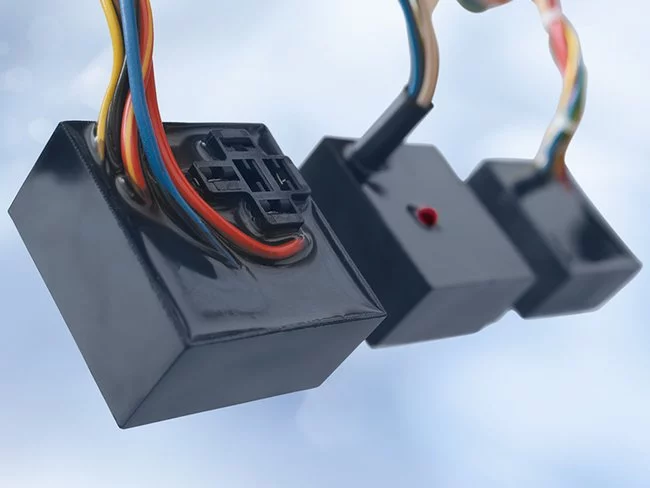
Automotive electronic sensors are primarily used in areas such as the braking system, transmission system, engine system, speed and position sensing system, and vehicle air-conditioning system.
The main types of sensors include gear position, barometric pressure, oil pressure, steering angle, vehicle speed, position, tire pressure, temperature, humidity, air quality, rainfall, illuminance, and oxygen sensing.
Adhesive solutions for automotive sensors must meet stringent requirements for high reliability, environmental resistance—such as resistance to high temperatures, vibration, and chemical corrosion—and precise bonding and sealing performance.
1. Adhesive Types and Selection Recommendations
Silicone rubber: Resistant to high and low temperatures (-60°C to 250°C), with excellent elasticity and electrical insulation.
Application :
Temperature sensor sealing (e.g., around the engine).
Bonding of radar sensor radomes (e.g., in ADAS systems).
Epoxy resin adhesive: High strength, chemically resistant, and capable of conductive or insulating modification. 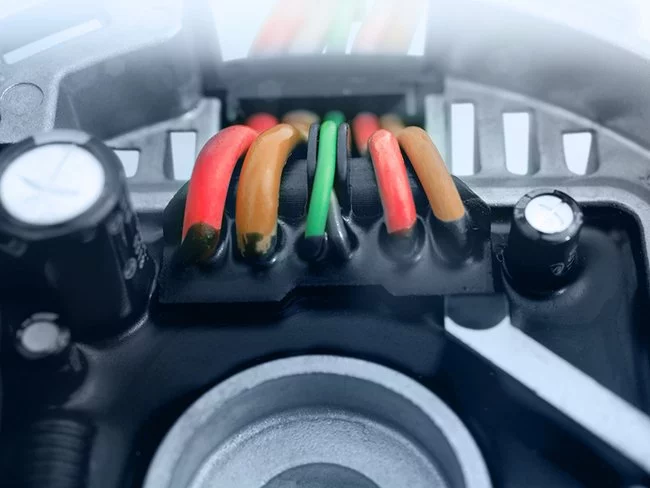
Application :
Encapsulation of pressure sensor circuit boards (e.g., for turbocharger pressure sensing).
Magnetic‑sensitive sensor core bonding (requires a non‑magnetic filler).
Polyurethane adhesive: Good flexibility, vibration resistance, and strong adhesion.
Application :
Vehicle-mounted camera module secured.
Harness connector sealing (e.g., rain sensor).
Special high-temperature adhesive: Ceramic-based adhesives, used in oxygen sensors (e.g., Y2O3–Al2O3–SiO2 systems).
2. Key Performance Test Standards
Environmental Reliability : High temperature and high humidity (85°C/85% RH, 1000 hours); thermal shock (-40°C to 125°C, 100 cycles).
Mechanical properties : Vibration testing (ISO 16750-3); shear strength (ASTM D1002).
Chemical compatibility : Resistant to immersion in engine oil, antifreeze, brake fluid, and other media.
3. Shanghai Hinnel New Materials’ recommended adhesives for automotive electronic sensors
| Application scenarios | Recommended adhesives | Recommended adhesives | Product Type | Product Component Type | Product Features |
| Vacuum Booster Pressure Sensor | HNGel 5272 Silicone Gel | Silicone gel | Two-component | Room-temperature/heat-curing | Soft self-healing, low stress |
| Vacuum Booster Pressure Sensor | HNSIL 733 Organic Silicone Adhesive Sealant | Organosilicone gel | Single-component | Room-temperature curing | RTV, housing sealing |
| Vacuum Booster Pressure Sensor | HNSIL 816 Organic Silicone Adhesive Sealant | Organosilicone gel | Single-component | Heat curing | HTV, housing sealing |
| DPS differential pressure sensor | HNEP 6060 Epoxy Structural Adhesive | Epoxy adhesive | Single-component | Heat curing | Adhesive sealing of PA66 nylon components |
| Hall-effect position sensor | HNEP6225 epoxy potting compound | Epoxy adhesive | Two-component | Room-temperature/heat-curing | Encapsulated inside the housing, high strength. |
| Hall-effect position sensor | HNPU512 Polyurethane Potting Compound | Polyurethane adhesive | Two-component | Room-temperature curing | Encapsulated inside the housing, low stress. |
| Tire pressure sensor | HNEP6080 epoxy potting compound | Epoxy adhesive | Two-component | Room-temperature/heat-curing | Encapsulation inside the housing |
| Tire pressure sensor | HNPU512 Polyurethane Potting Compound | Polyurethane adhesive | Two-component | Single-component | Encapsulated inside the housing, low stress. |
| Tire pressure sensor | HNSIL 700 Low-Viscosity Silicone Gel | Organosilicone gel | Single-component | Single-component | Single-component fast surface drying |
| Strain-gauge pressure sensor | HNEP6225 epoxy potting compound | Epoxy adhesive | Two-component | Room-temperature/heat-curing | Potting and encapsulation protection, resistant to thermal cycling. |
| Temperature sensor | HNEP6225R-2 Epoxy Potting Compound | Epoxy adhesive | Two-component | Room-temperature/heat-curing | Halogen-free, environmentally friendly, high-temperature resistant, and resistant to thermal shock. |
| Temperature sensor | HNEP6225R epoxy potting compound | Epoxy adhesive | Two-component | Room-temperature/heat-curing | Low viscosity and high thixotropy, used for chip encapsulation. |
| Speed sensor | HNEP6225 epoxy potting compound | Epoxy adhesive | Two-component | Room-temperature/heat-curing | Potting and encapsulation protection, resistant to thermal cycling. |
| Vehicle height sensor | HNPU510 Polyurethane Potting Compound | Polyurethane adhesive | Two-component | Room-temperature curing | Double 85‑hour reliability, thermal cycling resistance from –45°C to 125°C, high strength |
| Inductive sensor | HNEP6225 epoxy potting compound | Epoxy adhesive | Two-component | Room-temperature/heat-curing | Encapsulation of inductor coils |
| Rainfall sensor | HNGel 5277J Organic Silicone Gel | Silicone gel | Two-component | Room-temperature/heat-curing | Robust gel, 5A hardness, high strength |
In the manufacturing of automotive electronic sensors, adhesives are primarily used to secure sensor components, encapsulate the sensor, and connect it to the circuit board. Their performance directly affects the sensor’s stability and reliability. High‑quality adhesives exhibit strong bonding strength, excellent resistance to high and low temperatures, superior moisture resistance, and robust electrical insulation, effectively shielding the sensor from environmental interference and damage, thereby ensuring long‑term, stable operation.
Furthermore, as automotive electronics technology continues to advance, the performance requirements for adhesives are becoming increasingly stringent. Modern automotive electronic sensors often operate in more complex and harsh environments, necessitating adhesives that not only provide basic bonding and encapsulation but also withstand extreme conditions such as high temperatures, high pressures, and strong magnetic fields, while maintaining stable physical and chemical properties. Consequently, the research and development of high-performance adhesive materials is of great significance for enhancing the reliability of automotive electronic sensors and extending their service life.
Summary:
In summary, adhesives, as critical auxiliary materials in the manufacturing of automotive electronic sensors, directly affect the sensors’ stability and reliability through their performance and quality. As automotive electronics technology continues to advance, the performance requirements for adhesives will become increasingly stringent, driving ongoing research and development in adhesive materials. Shanghai Hinnel New Materials Technology Co., Ltd. is also steadily advancing the R&D and application of high-performance adhesives.
We are here to assist you at any time.
Whatever adhesive challenge you face, we are ready to offer our insights, expertise, and solutions to help you move forward.
How can we assist you?



