
Adhesive Solutions for Various Sensors in Electric Vehicles
New energy vehicles employ a wide variety of sensors, which play critical roles in the vehicle’s powertrain, battery management, safety control, and autonomous driving systems. Below is an overview of the main sensor categories, recommended adhesives, and an analysis of their importance:
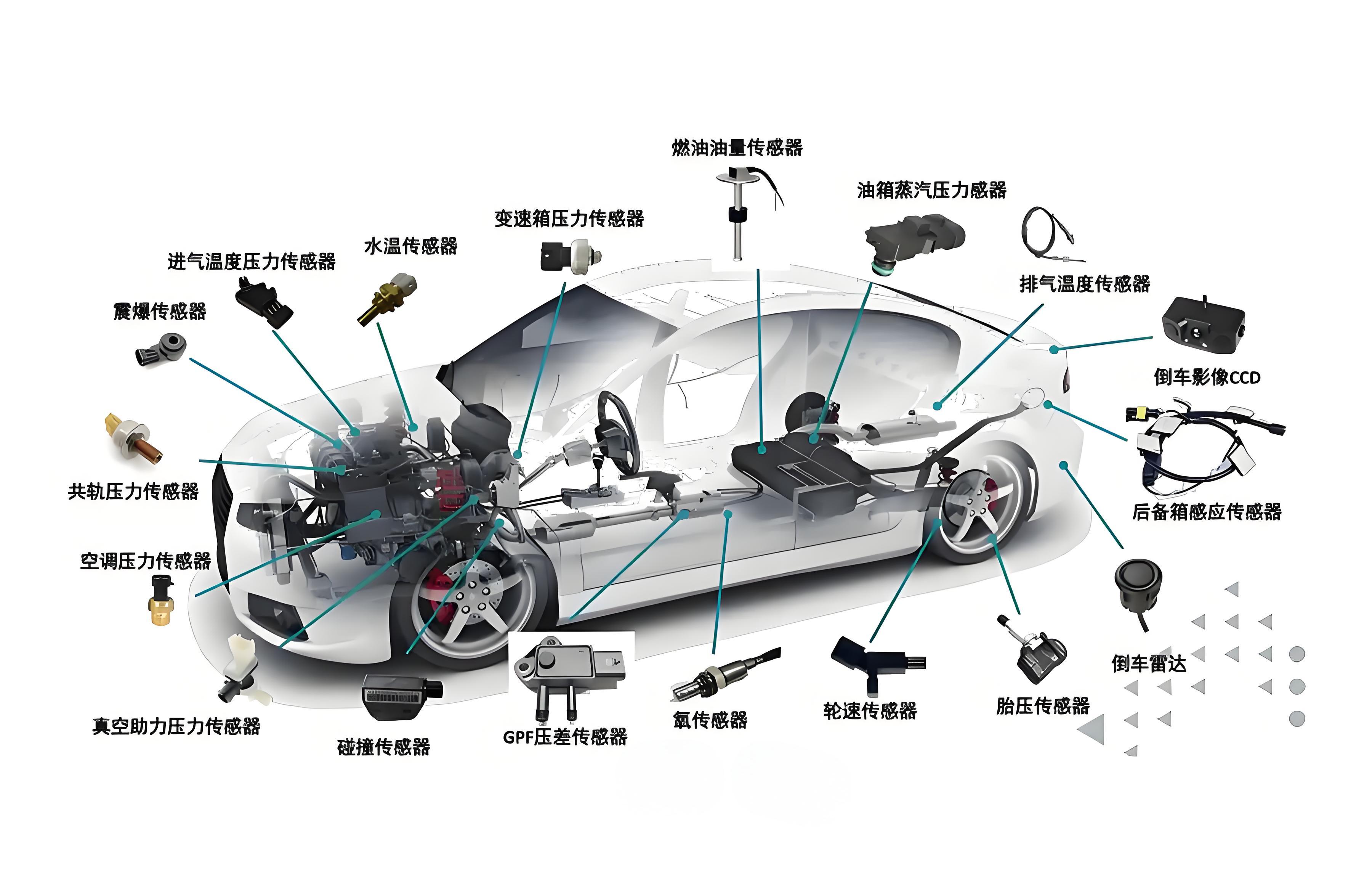
I. Types of Core Sensors in New Energy Vehicles
1. Battery Management System (BMS) sensor
Temperature sensor (NTC/PTC): Monitors the battery pack temperature to prevent overheating.
Voltage/Current Sensor: Monitors the battery’s charge and discharge status in real time.
Gas sensor: Detects flammable gases (such as hydrogen) generated by battery leakage or thermal runaway.
Importance : Directly affects battery safety, lifespan, and range.
2. Motor drive system sensor
Rotary transformer/Hall sensor: monitors motor speed and position.
Temperature sensor: monitors the temperature of the motor and inverter.
Current sensor: Precisely controls the motor’s output torque.
Importance : Affects drive efficiency and energy recovery.
3. Thermal Management System Sensor
Pressure sensor (refrigerant circuit).
Humidity sensor (cabin environmental control).
Importance Optimize the thermal management efficiency of the battery and motor.
4. Autonomous Driving and Environmental Perception Sensors
Cameras, millimeter-wave radar, LiDAR, and ultrasonic radar.
Importance : Implement ADAS functions (such as automatic braking and lane-keeping).
5. Traditional vehicle‑enhanced sensors
Tire pressure monitoring system (TPMS), brake pressure sensors (for wire-controlled braking systems).
II. Recommended Adhesives for Sensors and Criteria for Selection
1. Adhesive sealant
Application scenarios: sealing battery pack housings and securing sensor housings.
Recommended adhesive type :
Organosilicone (Shanghai Hinnel HNSIL 734): High-temperature resistant (-50℃~200℃), with excellent elasticity, suitable for battery pack sealing.
Polyurethane adhesive (Shanghai Hinnel HNEP 7003): High-strength bonding, suitable for vibrating environments (such as motor sensors).
Importance : Prevents the ingress of moisture and corrosive gases, thereby extending the sensor’s service life.
2. Thermal conductive adhesive
Application scenarios: BMS temperature sensors, power module thermal management.
Recommended adhesive type :
Epoxy thermal conductive adhesive (Shanghai Hinnel HN425 Thermal Conductive Silicone Grease): High thermal conductivity (>3 W/m·K), excellent insulation.
Silicon-based thermal interface pad : Flexible filling to reduce thermal resistance.
Importance : Prevent localized overheating of the battery and ensure the accuracy of temperature monitoring.

3. Encapsulating adhesive
Application scenarios: protecting current-sensor PCBs and LiDAR internal circuits.
Recommended adhesive type :
Polyurethane potting compound (Shanghai Hinnel New Materials HNEP 512): Chemically resistant and highly mechanically strong.
Silicone potting compound (Shanghai Hinnel HNSIL 8730): Excellent flexibility and resistant to thermal shock.
Importance : Shockproof and moisture-resistant, enhancing reliability in complex environments.
4. Conductive adhesive
Application scenarios: electromagnetic shielding or grounding requirements (e.g., radar sensor housings).
Recommended adhesive type :
Silver-filled epoxy adhesive : Excellent electrical conductivity and rapid curing.
Importance : Reduce electromagnetic interference (EMI) to ensure stable signal transmission.
5. Structural adhesive
Application scenario: Mounting and securing camera/radar brackets.
Recommended adhesive type :
Epoxy structural adhesive (Shanghai Hinnel HNEP 6120HP): High shear strength, impact-resistant.
Importance : Prevent sensor displacement from causing ADAS functionality to fail.
III. Key Factors in Adhesive Selection
· Environmental adaptability: resistant to high and low temperatures (-40°C to 150°C), resistant to salt spray (suitable for coastal areas), and aging-resistant.
· Chemical compatibility: Avoid reactions with coolants and battery electrolytes.
· Processability: curing time and ease of application (e.g., two-component vs. one-component).
· Safety Certification: Complies with environmental protection, ISO, and other standards.
IV. Summary of Significance
Security: Substandard adhesives may cause sensor seals to fail, leading to short circuits or fires (such as battery thermal runaway).
Reliability: The durability of the adhesive directly affects the accuracy of sensor data (e.g., temperature drift).
Lightweight: Adhesive bonding replaces mechanical fastening, reducing vehicle weight.
Cost Control: Appropriate adhesive selection can reduce maintenance costs (e.g., by decreasing the frequency of sensor replacements).
Significant progress has been made in the development of adhesive solutions for electric‑vehicle sensors. These innovative solutions not only enhance sensor performance and reliability but also provide robust support for the intelligent, high‑efficiency operation of electric vehicles.
We are here to assist you at any time.
Whatever adhesive challenge you face, we are ready to offer our insights, expertise, and solutions to help you move forward.
How can we assist you?



