
Thermal grease
Thermal grease
Thermal grease and thermal gel are thermal interface materials used in electronic devices, offering excellent thermal conductivity.
It enables tight thermal contact between the surface of the electronic component to be cooled and the heat sink, reducing thermal resistance and rapidly and effectively lowering the component’s temperature, thereby extending its service life and enhancing its reliability.
Excellent resistance to high and low temperatures, outstanding weather and radiation resistance, and superior dielectric properties.
It can be used continuously over a temperature range of −60°C to 200°C and fully complies with the EU RoHS directive.
Market applications: power modules, integrated circuits, power supply modules, automotive electronics, controllers, LED assemblies, telecommunications equipment, computers and their peripherals, and more.
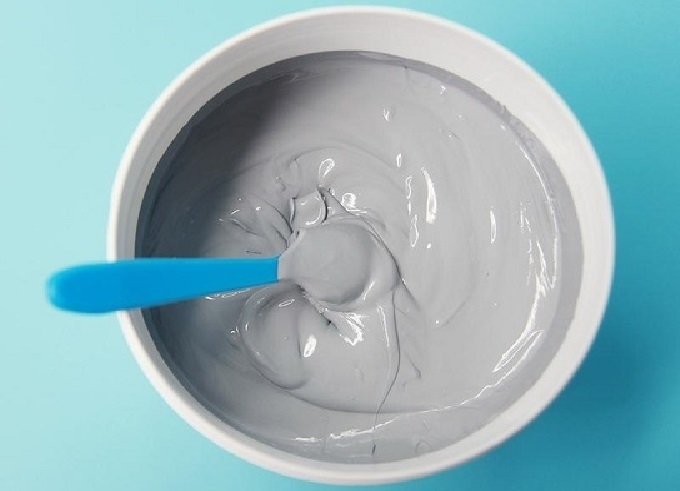
Hinnel product features
Good stability
Excellent high- and low-temperature resistance
High thermal conductivity, high toughness, and high elasticity
It exhibits excellent dielectric properties and is non-toxic and odorless. Low‑viscosity, non‑dripping
Water-resistant, ozone-resistant, and resistant to atmospheric aging; does not corrode the substrate; exhibits stable chemical and physical properties.
| Product model | Type | Exterior color | Viscosity | Thermal conductivity | Key Features |
| cps | W/mk | ||||
| HN420 | Single-component | White | Thixotropic paste | 0.8 | General-purpose thermal grease with a thermal conductivity of 0.8, offering low thermal resistance and minimal settling; it can be applied by hand or via screen printing. |
| HN425 | Single-component | White | Thixotropic paste | 2.5 | High‑thermal‑conductivity thermal grease with a thermal conductivity of 2.5, low thermal resistance and minimal settling; suitable for manual application as well as screen printing. |
| HN430 | Single-component | Gray | Thixotropic paste | 3.5 | High‑thermal‑conductivity thermal grease with a thermal conductivity of 3.5, low thermal resistance and minimal settling; suitable for manual application as well as screen printing. |
How to apply thermal grease:
Clean the surface: Before applying thermal paste, be sure to clean the surfaces of the heat‑dissipating component and the heatsink to remove dust, grease, and other contaminants.
Use in moderation: When applying thermal grease, avoid overapplication, as this can lead to extrusion and reduced heat‑dissipation performance. A small amount—about the size of a grain of rice—is usually sufficient.
Uniform Distribution: After applying thermal grease, use a scraper or a heat sink to spread it evenly across the entire contact surface, ensuring that the thermal grease fully fills any gaps.
Pay attention to pressure: During assembly, ensure that adequate pressure is applied to the heat-dissipating component to guarantee full contact with the thermal interface material and to fill any microscopic gaps.
Precautions:
The thermal grease has a shelf life of approximately 12 months at room temperature. If sedimentation occurs after 12 months, stir thoroughly before use; it remains suitable for application.
Characteristics of thermal conductive gel:
1. The thermal conductive gel series is a two-component, pre‑formed thermal interface material that primarily meets the requirements for low contact pressure and high compressive modulus during application. It enables automated manufacturing, ensures excellent thermal contact with electronic components, exhibits low interfacial thermal resistance, and provides superior electrical insulation properties.
2. Thermal conductive gel inherits the excellent properties of silicone materials, including superior compatibility, outstanding weather resistance, exceptional high- and low-temperature stability, and excellent electrical insulation. At the same time, it offers remarkable moldability, enabling effective filling of uneven interfaces and meeting thermal‑transfer requirements across a wide range of applications. It delivers high thermal conductivity, operates under low compressive stress, exhibits low pressure and a high compression ratio, provides superior electrical insulation, demonstrates excellent thermal stability, and is compatible with automated processing.
3. Compared with thermal pads, thermal gels are softer and exhibit superior surface adhesion; they can be compressed to extremely thin profiles, significantly enhancing heat-transfer efficiency. Additionally, thermal gels are virtually free of hardness, so their use does not induce internal stresses in the device.
4. Thermal conductive gel exhibits flowability, ensuring excellent thermal contact even on uneven PCBs and with irregular components, such as batteries and component corners.
5. Thermal conductive gel exhibits good adhesion and does not suffer from oiling or drying out, offering certain advantages in terms of reliability.
6. Thermal conductive gel offers the advantage of continuous processing; it can be directly weighed and applied. A common method for continuous application is using a dispensing machine, which enables precise, spot‑by‑spot dosing, reducing labor costs while boosting production efficiency.
How to use thermal conductive gel:
1. For manual thermal conductive adhesives, first unscrew the nozzle cap, attach the threaded mixing tip, and then secure the cartridge in the AB glue gun’s chuck. Apply firm pressure to dispense the adhesive; the A and B components are extruded through the mixing tip and, guided by the threads, achieve uniform blending (resulting in a single, consistent color). Finally, apply the evenly mixed thermal conductive adhesive to the heat‑dissipating areas according to the thermal management design. For dispensing‑type adhesives, follow the operating instructions for the dispensing machine.
2. Curing time: Starting from the moment the A and B components come into contact at the mixing head, the viscosity continuously increases throughout the working period, after which the material gradually hardens and becomes elastic, with its hardness steadily rising until it reaches a stable value.
3. Special note: Thermal conductive gel differs from adhesive; its bonding strength is relatively weak and it should not be used to secure heat-dissipating components.
Our products don’t stop here.
We have a dedicated team of marketing professionals and R&D experts who can provide you with tailored adhesive solutions perfectly suited to your specific needs.
How can we assist you?



